perjantai 9. huhtikuuta 2021

Water browning in the Evo area


Over the last decades, some surface waters (lakes, rivers) have become browner. Such phenomenon was observed throughout Finland and is referred to as water browning or brownification.

I have been studying browning in the Evo area since 2019 when I first came to Lammi Biological Station for a 2-month internship. I learned that browning led to a decline in aquatic invertebrate global abundance in Evo, and started to wonder about the impact of forestry activities practiced in the region on water colour.
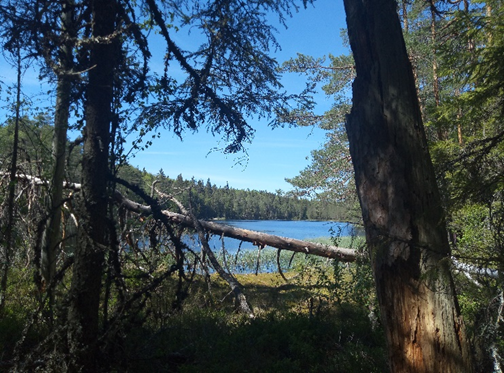
Lake Valkea-Kotinen, my favourite place

I decided to come back in 2020 to carry on my studies on browning for my master’s thesis. My purpose was to investigate the contribution of forestry activities to changes in colour in Evo lakes and to highlight different aquatic invertebrate communities along a browning gradient.

My stay at LBS was very convenient and enjoyable as it is very close from Evo, where I had to perform fieldwork. Fieldwork was definitely my favourite part of my study. Evo is a beautiful area with its forest and lakes. I almost did not feel like I was doing fieldwork since I was so amazed by the Evo landscape.

Figure 2: invertebrate sampling
My fieldwork consisted in sampling aquatic invertebrates in 17 lakes of different characteristics: beaver-influenced, clear water, brown water and lakes located in protected areas. For that, I used activity traps (a method that has been traditionally used in Evo invertebrate surveys) in June 2020. Invertebrates were identified on the lake sites.

This fieldwork session highlighted that Evo lakes had different invertebrate communities as expected. For example, I found that copepods were negatively affected by browning, while isopods had higher abundance in brown waters. Other invertebrate families were affected by other environmental variables such as trichopterans that were found in higher abundance in protected lakes.

In parallel, I was also developing a method to identify clearcutting activity based on tree canopy cover. With this method, I was able to show that a high surface of clearcutting in the catchment of a lake led to high lake water colour. This demonstrated the contribution of forestry practices to the ongoing brownification of lakes.

Other interesting results came out of this study. Beavers, for instance, substantially affected lake water colour, which shows why their presence need to be considered in water quality studies in beavers distribution area. This study also demonstrated that lake cover had a significant impact on lake water colour. The more upstream lakes a lake has in its catchment, the less coloured it is. Adaptation of catchment management practices could be drawn out of these results.
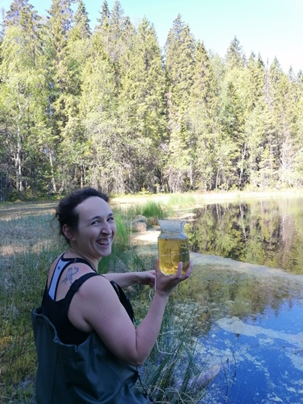
More sampling
Lammi Biological Station is a place where many people share their research interest and their culture. I met many people that helped me with my research and that I could also help in return. It is always such a great experience to come to the station.

I successfully graduated in September 2020 in France and am in the process of writing scientific papers on the findings in my master’s thesis. In Finland, I found my vocation to carry out a research career. In June 2021, I will start a PhD at Helsinki University on brownification. I want to thank the foundation for supporting me throughout this journey in Finland.

Clarisse Blanchet is a 2020 LBAYS grant recipient

keskiviikko 28. lokakuuta 2020

Doing research (not about a pandemic) in a pandemic


In March 2020 I arrived at Lammi Biological Station, where I was planning to stay for most of the coming 3 Months to perform the first set of experiments for my PhD. I aim to research the potential of insects to adapt to climate change, and for this I use Glanville fritillary butterflies (Melitaea cinxia) originating from different places across Europe. By rearing these individuals from different climates (From Finnish ones used to cold temperatures, all the way to Spanish ones, that are used to much warmer conditions) under controlled temperatures in the laboratory, we can see if there are differences between populations. This will help understand mechanisms behind adaptation to different climates, and thus also understand how these butterflies might respond to future climate change. Glanville fritillary butterflies have a complex life cycle: they hatch from the eggs as small caterpillars, that go through 5 instars before going to diapause for the winter. After diapause, they go through 2 more instars and then pupate after which adults eclose from the pupae, who lay eggs, and the cycle can start again. These different life stages and accompanying strategies allow us to study the effects of environmental stress on each one of them.

During the spring, I planned to rear Spanish post-diapause larvae, who originate from different climates within Spain to adulthood at different temperatures to see if there would be differences in mass, development time, wing patterns or flight metabolic rate. Besides that, I also planned to rear offspring from Finnish, Estonian, French and Spanish butterflies from egg to diapause at different temperatures and monitor the mass increase, development time and fat content of the larvae. These were big plans for one spring: Detailed experiments like this provide a lot of information, but also require much work. Besides weighing more than 3000 small caterpillars (some of them multiple times) and taking pictures of their wings, the animals also have to be checked and fed with fresh Ribwort Plantain (Plantago lanceolata) leaves every day. In order to make this possible, I worked with a great team of two research assistants and a BSc student.

All of us were ready and excited to start the experiments, but two weeks after starting the COVID-19 pandemic broke loose. This brought great uncertainty and many questions: “will we be able to continue the experiments?” “Even just take care of the butterflies?” “Will we be able to visit home?” “What if one of us gets ill?”. Luckily, due to the remote nature of Lammi Biological Station and the fact that we were already present, we could continue doing our experiments and no butterflies had to be abandoned. With strict restrictions on visitors, luckily nobody got ill, but this also meant that all of us stayed at the station for the entire duration of the experiment. A strange situation, in which you all of a sudden become even more focused on the research, but also dependent on each other. I have memories of staying in quarantine together with the entire family of “Lammi people”. Of working long days in the lab and once-a-week grocery trips on Friday evening. Of thinking about experiments, and private sauna nights, and of endless walks in the beautiful Lammi forests on days off and swims in the lake after work.

Doing research during a pandemic is not simple and provided many challenges but with some luck and hard work by many people I managed to complete all of my planned experiments. Analysing the data takes perhaps even more time than performing the experiments and thus not all of the results are in yet, but the first graphs look very promising and give plenty of ideas for new research next year. Hopefully then in better circumstances, although every bad situation has a silver lining: I definitely had the best quarantine work, company and location of all!


tiistai 15. syyskuuta 2020

Spread of fungal communities in Finland


Mushrooms are  everywhere in Finland, from polypores to tasty forest floor morsels. But what do these community structures actually look like as a whole? Ecologists know that the richness and abundance of organisms vary with different environmental conditions; the tapestry of an old forest will be totally different from a tree plantation. But these patterns have been considerably less studied for fungi than other kingdoms, and their unique and also less known dispersal abilities complicate the picture further.

The purpose of my master's thesis was to get a basic picture of the spread of fungal communities across middle and southern Finland, specifically how the communities change over distances (large and small) and between different habitat patches (urban and natural). To see what fungi are there, my collaborators and I took samples of soil and spores in the air. We did this in five locations across the country, attempting to cover a decent spread of landscapes, and in each location there were six plots (divided between urban, natural, and edge), to pick up the finer scale changes.

Spore sampler

The site of my sampling was near Lammi Biological Station, where I stayed for two weeks at the end of August 2019. This beautiful area served as the base, from which I would drive to Lahti every few days for my urban samples and where I would do some basic sample processing, coordinating, and writing in the evenings. Field data collection, as always, was my favorite part of the studies. I spent the following winter analyzing the fungal OTUs I received after DNA sequences of my samples returned. Much of the time was spent going over and over the location based charts, curiosity finally being assuaged of what all mushroom species I might find in Finland.

 Then finally, this spring I submitted my thesis with all of my findings. Between Helsinki and Joensuu, fungal communities do not show distance decay to the rate I would have expected. Perhaps it's due to the relative homogeneity of the landscape at the larger scale? But this is speculation, and I am eager to see future studies that reach into the mechanisms and explanations, as well as replicating similar methodology in totally separate regions of the world. Anyway, the perhaps more striking results were the differences between urban and natural habitat types, providing even more evidence of the drastic effects of anthropogenic change on other populations.

Colleagues in my research group ran parallel analyses from my data, focused more on this aspect. It led to a paper published in ISME Journal, for which I am a co-author, titled 'Fungal communities decline with urbanization—more in air than in soil'.

 I am grateful to the foundation for providing the grant that made this research possible.

Brittni Joette Crosier is a 2019 LBAYS grant recipient

keskiviikko 15. tammikuuta 2020

Typpi vai fosfori? Kumpi rajoittaa Vanajaveden kasviplanktonin kasvua?


Alkukesän kasviplanktonlajistoa

Kasviplankton tarvitsee kasvaakseen mm. valoa ja ravinteita. Vesistöjen ravinnepitoisuudet vaihtelevat vuodenaikojen vaihtuessa. Esimerkiksi järvien jääpeite talvella, lumien sulaminen keväällä ja kuuma, aurinkoinen kesä vaikuttavat siihen, kuinka paljon mm. Vanajaveden ja Vanajan reitin vedessä on typpeä ja fosforia, ja minkälaisiin molekyyleihin nämä alkuaineet ovat milloinkin sitoutuneet. Kasviplankton muodostaa vesikasvien ohella sisävesien ravintoketjun tärkeän perustan. Mikäli vesistössä on paljon ravinteita, on myös näitä auringon valoa biomassaksi muuntavia perustuottajia runsaasti, enemmän kuin täysin luonnontilaisissa vesistöissä. On täysin luonnollista, että vesistöihin päätyy ravinteita sitä ympäröivältä maa-alueelta, mutta ihmistoiminta usein voimistaa tätä nk. rehevöitymistä. Merkittävä rehevöityminen johtaa mm. kalalajiston särkikalavaltaistumiseen, mahdollisesti myrkyllisten syanobakteerien massaesiintymien yleistymiseen ja jopa alusveden hapettomuuteen ja kalakuolemiin.
Vanajavedessä on jo 1950-luvulta lähtien havaittu rehevöitymisen merkkejä. Nykyään Vanajaveden ekologinen tila on tyydyttävä ja Vanajaveteen johtavan Vanajan reitin ekologinen tila jopa välttävän puolella. Tämä johtuu pääosin valuma-alueelta tulevasta kuormituksesta ja sen aiheuttamista korkeista ravinnepitoisuuksista vesistössä. EU:n vesipuitedirektiivin tavoitteena on saada kaikki suomalaiset järvet vähintään hyvään ekologiseen tilaan viimeistään vuoteen 2027 mennessä.


Pro gradu -tutkielmassani selvitin rajoittaako liukoinen eli välittömästi kasviplanktonin käytössä oleva typpi tai fosfori kasviplanktonin kasvua. Kasvatuskokeet tehtiin Lammin biologisella tutkimusasemalla vuosina 2016-2017 viidesti, jotta vuodenaikaisvaihtelut saatiin selville. Näytteenottopaikkojakin oli viisi: jokimaisella Vanajan reitillä Aulangon rautatiesilta, Kirstulansalmi ja Mierolansalmi, sekä Vanajaveden järviosuudella Ruskeenkärki ja Sääksmäki.


Jokimaisen osuuden ja järviosuuden vesissä oli
jopa silminnähtäviä eroja.
Kaikilla näytteenottopisteillä kasviplanktonin kasvu oli ympäri vuoden pääosin fosforirajoitteista, kuten suomalaisissa sisävesissä yleensäkin. Lievää typpirajoitteisuutta oli kuitenkin havaittavissa elokuussa Vanajan reitillä Aulangon alueella. Muilla pisteillä kasviplankton oli kesän aikana ottanut molemmat tutkimani ravinteet niin tehokkaasti käyttöönsä, että elokuussa sekä liukoisen typen että fosforin saatavuus rajoitti kasviplanktonin kasvua. Ylimääräiseen leväkasvuun tarvittaisiin siten molempia ravinteita samanaikaisesti. Kokeideni perusteella Sääksmäen järvipisteellä typen ja fosforin yhteisrajoitteisuus alkoi jo heinäkuussa.


Kasvatuskoe käynnissä. Kasvatushuoneen lämpötila 
ja valaistus säädettiin vallitsevia luonnonoloja mukaillen.
Veden virtaussuuntaan nähden kahden ensimmäisen näytteenottopisteen välissä olevan Paroisten jätevedenpuhdistamon vaikutus Vanajan reitin ravinnepitoisuuksiin oli vähäinen, ja pienenee entisestään, kun puhdistamolle rakennetaan uusi jäteveden käsittely-yksikkö lähivuosien aikana. Erityisesti puhdistamolta tuleva pistemäinen typpikuormitus vähenee, mikä on askel kohti Vanajaveden parempaa ekologista tilaa. Vesistöä ympäröivän alueen peltovaltaisuus puolestaan näkyi mm. veden ravinnepitoisuuden nousuna lumiensulamisen aikana. Peltojen rehevöittävää vaikutusta vesistöön on mahdollista säädellä mm. pitämällä lannoitusmäärät maltillisina. Jotta Vanajaveden ja Vanajaveden reitin ekologinen tila saadaan hyväksi, on tulevaisuudessa sekä haja- että pistekuormitusta vähennettävä edelleen. Onneksi ravinnepäästöjen hillitsemiseksi ja vesistöjen kunnostamiseksi on olemassa monia erilaisia lähestymistapoja ja uusia menetelmiä kehitellään jatkuvasti.

Henna Raitanen


perjantai 13. joulukuuta 2019

Tikkojen kolojen ja kolopuiden hyöty metsäluonnon monimuotoisuudelle


Tikat ovat metsäekosysteemin avainlajeja erityisesti boreaalisilla alueilla, joilla pääosa metsien koloista on niiden tekemiä. Tikat kovertavat pesäkoloja, joita monet muut lintu- ja nisäkäslajit sekä erilaiset selkärangattomat käyttävät myöhemmin. Tikkojen kolot ovat myös monien metsän sieni-, jäkälä- ja sammallajien elinpaikkoja. Huolimatta tikankolojen keskeisestä asemasta pohjoisissa metsäekosysteemeissä, kolojen määriä, ominaisuuksia sekä kolopuiden säilymistä on tutkittu tähän asti sangen vähän.

Olen seurannut tikkojen kolopuita yli 30 vuoden ajan Lammin seudulla osana metsälinnuston ekologian tutkimusta. Kolotutkimus on keskittynyt Evolle noin 170 neliökilometrin metsävaltaiselle alueelle. Vuotuinen maastokausi kestää tyypillisesti helmi-maaliskuun vaihteesta heinäkuun puoleenväliin. Kevään ja kesän säät vaihtelevat, ja maastotöissä olen pyrkinyt hyödyntämään mahdollisimman hyvin tyynten ja heikkotuulisten päivien koko valoisan ajan. Parasta maastokaudessa on liikkuminen Evon erämaisissa metsissä ja päästä seuraamaan kevään ja kesän etenemistä ”paikan päällä”.

Keväällä tavoitteena on kartoittaa tutkimusalueen tikkareviirit sekä paikantaa todennäköisimmät pesimäpaikat ja etsiä mahdolliset uudet pesäkolot. Pesäpuista ja -koloista sekä metsäympäristöstä mitataan maastossa erilaisia ominaisuuksia, kuten metsän ikä, metsätyyppi, pesäpuun laji, koko ja kunto sekä koloaukon korkeus ja ilmansuunta. Kolopuiden tiedot sijanteineen tallennetaan paikkatietojärjestelmään, jossa niitä voidaan tarkastella yhdessä mm. erilaisen satelliitti-, ilmakuva- ja karttatiedon kanssa. Myös vanhat kolopuut käydään tarkastamassa maastokauden aikana, ja niiden käyttöä seurataan vuodesta toiseen niin kauan kuin kolot ovat vielä käyttökelpoisia.
Tutkimuksen tuloksia on julkaistu toistaiseksi pohjan- ja pikkutikan pesäpuiden ja -kolojen ominaisuuksista sekä niiden säilymisestä ja käytöstä kolojen eliniän ajan. Näiden lajien, sekä myös muiden tikkalajien vielä julkaisemattomien tietojen perusteella kolopuut ja niiden yksittäiset kolot säilyvät usein ulkoisesti käyttökelpoisina jopa kymmeniä vuosia, mutta muut kololintulajit, mukaan lukien eri tikkalajit, käyttävät niitä pääosin vain kolon ensimmäisten vuosien aikana. Pääsyynä hyvin vanhojen kolojen vähäiseen käyttöön lienee kolojen fysikaalisten ominaisuuksien, kuten lämmöneristyskyvyn ja suojaavuuden heikkeneminen niiden ikääntyessä. Kolopuiden ja kolojen ominaisuudet kuitenkin vaihtelevat puulajin ja puun kunnon mukaan; lahoavissa lehtipuissa sijaitsevat kolot säilyvät yleensä selvästi lyhemmän aikaa kuin havupuiden kolot. Toisaalta suurissa elävissä haavoissa ja keloutuvissa männyissä kolot säilyvät pitkään, ja tällaisia vanhoja koloja myös käytetään keskimääräistä enemmän ja pidempään.

Tikkojen sekä omia koloja kovertavien hömö- ja töyhtötiaisen kolot ovat yleensä kuolleissa, huonokuntoisissa tai jollain tavoin vaurioituneissa puissa. Varsin usein samassa kolopuussa on useampia, eri lajin kovertamia koloja. Kolojen määrä on selvästi suurempi luonnontilaisen kaltaisilla metsäalueilla kuin talousmetsissä. Sekä kololintujen että muiden koloja käyttävien eliöiden kannalta olisikin tärkeää, että mahdollisimman moni nykyinen kolopuu ja muilta ominaisuuksiltaan samantyyppinen mahdollinen tuleva kolopuu voitaisiin säästää metsänhoitotoimissa.
Kolotutkimus ja koko Lammin seudun pitkäaikainen metsälintututkimus on viimeisen kymmenen vuoden aikana toteutettu pääosin omalla rahoituksella. Tutkimuksen jatkosta on päätetty aina vuosi kerrallaan, ja Lammin biologisen aseman Ympäristötutkimuksen Säätiön apuraha vuonna 2018 oli tärkeä seurantojen keskeytymättömälle jatkumiselle.

FT Timo Pakkala on Itä-Suomen yliopiston spatiaalisen ekologian dosentti ja vuonna 2018 LBAYS apurahan saaja

perjantai 21. joulukuuta 2018

Ravinto ja pesäpedot sorsien pulmana kosteikoilla


Minulle myönnettiin kesälle 2017 apuraha pro gradu -työhöni sorsien lisääntymiselinympäristövalinnasta. Tarkoituksenani oli perehtyä elinympäristötekijöiden vaikutukseen sorsiin pesintä- ja poikuevaiheessa. Tutkin voiko näiden kahden vaiheen välillä olla trade-off-tilanne, jossa sorsaemo joutuu valinnassaan suosimaan jompaakumpaa toisen kustannuksella. Erityisen mielenkiinnon kohteena tässä tutkimuksessa oli vieraslajipetojen, supikoiran ja minkin, merkitys sorsanpesien rosvoina.

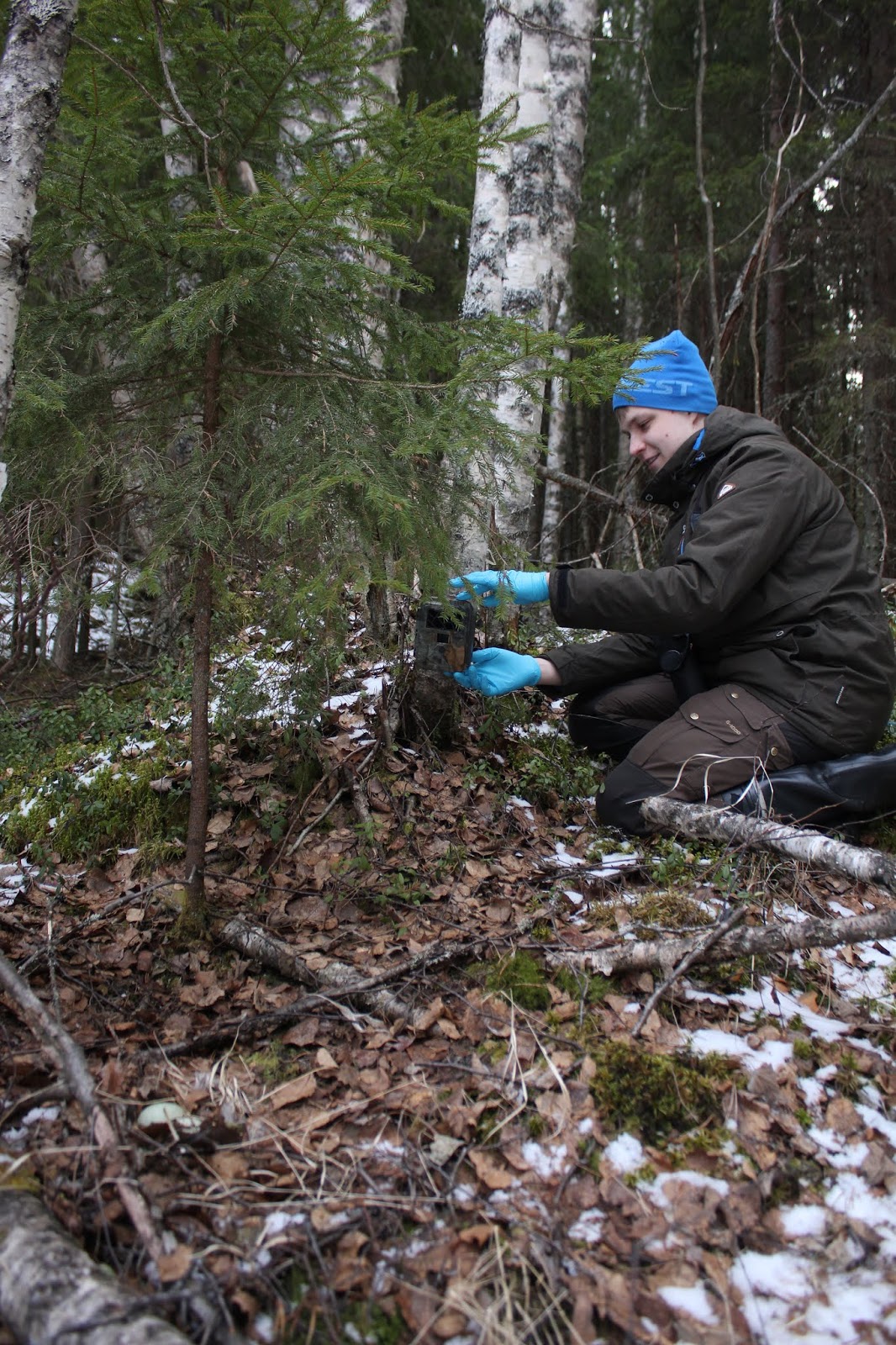
Toteutin työni ohjaajani Sari Holopaisen kanssa kahdella tutkimusalueella: metsävaltaisella ja vesistöiltään karulla Evon retkeilyalueella sekä rehevällä maatalousvaltaisella Maaningalla. Evolla tutkimusta oli helppoa ja mielekästä tehdä Lammin biologiselta asemalta käsin. Tutkimuskosteikkoihimme kuului karuja järviä, majavalampia ja kausikosteikoita Evolla sekä reheviä järviä ja tulvikoita Maaningalla. Jokaisella kosteikolla laskimme kesän aikana sorsaparit ja poikueet, pyydystimme vesiselkärangattomia sekä teimme predaatiokokeen, jossa seurasimme riistakameralla keinotekoisia pesiä, joissa oli kasvatettujen sinisorsien munia. Näin saimme tietoa kosteikoiden sorsamääristä, sorsien ravinnon määrästä sekä pesiä uhkaavista pedoista ja pesien saalistusriskistä.

Tutkimuksemme ajoittuivat loppukeväästä keskikesään.  Jos hyttysiä ei lasketa, niin mikä voisikaan olla nautittavampaa kuin viettää tuota eloisinta vuodenaikaa kauniilla kosteikoilla mitä monipuolisimmissa luontoympäristöissä. Aivan täysin mutkattomasti aineiston keruu ei kuitenkaan sujunut. Kevätkesä 2017 oli hyvin kylmä, mikä näkyi niin sankan lumisateen viivästyttäminä sorsalaskentoina kuin jäätyvinä sorsanmuninakin. Ennen kaikkea huonot olosuhteet näkyivät sorsien onnettomana poikuetuottona. Evon ensimmäisessä poikuelaskennassa havaittiin poikueita vain kahdella järvellä.

Tarkemmat tulokset poikueiden osalta jäivät siis laihaksi, mutta sorsaparien esiintyminen jo osoitti, että selkärangattomilla oli positiivinen vaikutus sorsien esiintymiseen. Merkittävin vaikutus oli kuitenkin kosteikon ominaisuuksien sijaan alueella. Maaningan rehevissä ympäristöissä sekä pareja että poikueita oli merkittävästi enemmän. Pesien selviytymistodennäköisyys oli taas Maaningalla pienempi, johtuen ennen kaikkea maatalousympäristössä viihtyvien varislintujen runsaudesta. Harakka olikin tutkimuksen yleisin pesiä ryöväävä laji. Tulokset kertovat, että alueiden välillä on trade-off-tilanne: sorsat suosivat reheviä ruokailualueita, suuremmasta pesänmenetysriskistä huolimatta. Tämä näkyy myös sorsien poikuetuotossa, sillä vaikka poikueiden lukumäärä oli Maaningalla suurempi, Evolla suurempi osuus pareista onnistui saamaan poikueen vesille. Vieraslajien merkityksestä taas kertoo se, että melkein kolmasosa kaikista ryövätyistä pesistä tuli supikoiran ryöväämäksi. Minkki oli tutkimuksessamme vastuussa vain yhden pesän tuhosta.

Sorsapopulaatiot – erityisesti juuri rehevillä vesillä – ovat taantuneet Suomessa voimakkaasti viime vuosikymmeninä ja tämän tutkimuksen avulla voimme ymmärtää enemmän sorsien lisääntymiselinympäristöjen merkityksestä ja niihin liittyvistä ongelmista. Tästä iso kiitos kuuluu myös tälle säätiölle, joka rahoituksellaan mahdollisti tutkimukseni toteutusta.

Elmo Miettinen on vuonna 2017 LBAYS apurahan saaja

keskiviikko 31. lokakuuta 2018

Variation in biomass and soil carbon stocks across Pääjärvi catchment area – a landscape ecology and GIS approach


Pääjärvi catchment and biomass
sample points
My professional duties and my MSc and PhD topics are all related to forest ecosystems, especially to forest ecology, forest monitoring and GIS as well. The title of my MSc Thesis was: “Variation in biomass and soil carbon stocks across Pääjärvi catchment area – a landscape ecology and GIS approach„ in which I studied the previously done “Processes controlling dissolved organic carbon fluxes in boreal catchments (PRO-DOC)” project in Lammi, and collected forest site attribute data about the area and made my research with new approach.
Pääjärvi catchment and biomass map
created with GIS

I used measured and online data as well meanwhile I created my own GIS maps connected to landscape ecological approach. I picked the most important landscape factors (elevation, slope, aspect, bedrock, soil, site type) and tested their correlation to each other and forest biomass and soil carbon stocks. As results I got that forest ecosystems are very complicated, each factor has impact on every other, but only site type had stronger relations to every factor, especially to tree and soil carbon stocks. Therefore, I felt that we need to study an area for longer period to be able to say precisely what happens in the landscape.


Effects of snow and wind breaks in Bukk mountains from July
 2017 using high-resolution Sentinel NDVI images.
For this reason, we need to develop monitoring systems, this is connected to my PhD topic: “Usage of time-series of satellite images in Hungarian Forest Monitoring”. By the usage of modern technologies, we can monitor constantly the changes of Earth’s state with satellite based remote sensing. Due to the high importance of forest monitoring on vast areas (2 million hectares in Hungary), the satellite technologies became real supporters or alternatives of ground-based monitoring systems by providing data regularly, geographically explicitly and freely. Good example of these in Hungary the Remote-sensing based Forest Health Monitoring System (shortly ‘TEMRE’ in Hungarian; URL: ) of Hungarian Forest Research Institute, which complements well the ground-based monitoring system running by the Institute and the NFCSO. Forestry Department for decades.

In TEMRE the downloading, filtering and presentation of freely available, moderate resolution satellite images happens automatically by algorithms. On the forest maps updated in every 16 days during the vegetation season, it is possible to monitor the photosynthetic activity and health of forests on the website (see NDVI image above). With this system we managed to show the effects of forest damages: ice-breaks, insect gradations, we created supplementary layers in the system such as tree species (oak, beech, spruce, etc.) and site conditions (soil, hydrology, aspect, slope, etc.) to visualize the attributes of the affected area.

In favor of optimization of developments, we endeavor to establish international connections with Finnish, Swedish, American, Canadian or Russian experts where forest areas are even bigger than in Hungary, and satellite-based monitoring is even more suggested.


Tamás Molnár is a research fellow of Hungarian Forest Research Institute and PhD student at the University of Sopron and a 2016 LBAYS grant recipient