torstai 2. helmikuuta 2023

Learning from local ecological knowledge to improve biodiversity around boreal temporary wetlands

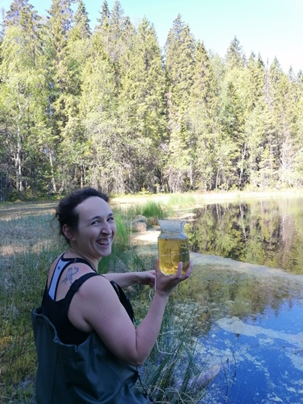
 My interest in wetlands started when I was working back in Nepal and grew later when I got to research more during my MSc in the Netherlands. I had worked in Ramsar sites and the restoration of the urban lakes before, but I decided to pursue temporary wetlands as my research area for my PhD. I have always been interested to work in the interface of natural and social sciences, thus I saw great implications of my interests to study this important habitat which till date is an understudied topic. Thankfully, I also have supervisors with background in biology, ecology and social sciences that allows me to receive continuous support and feedback integrating both domains.

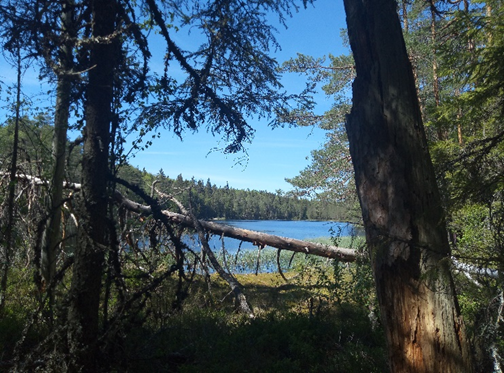
Often known as “'isolated”, “vernal”, “seasonal”, “ephemeral” wetlands, the temporary wetlands are isolated in the landscape, meaning that they are not connected to inlets / outlets. They are characterized by the seasonal hydroperiod meaning that they dry up usually once a year (with some exceptions drying in every few years). Seasonal wetlands are also widely used by terrestrial vertebrates as refuge, foraging sites and water point at different stages of their life cycle. In addition, they have been used as a source of water for different provisional services.

Temporary wetland in Evo, Finland
Due to their limited size, they can be extremely vulnerable to environmental changes, including climate change, and society development needs. The economic, cultural and biodiversity challenges surrounding these small wetlands are therefore important, yet the lack of rigor and coherence in the regulatory protection of small aquatic resources remain a global phenomenon.

However, due to their seasonality, sizes, occurrence and distribution in the landscape, temporary wetlands are quite complex when it comes to detection and monitoring only with remote sensing technologies. Thus, with an objective to study the ecosystem functions of small temporary wetlands in Finnish harvested forest, their biodiversity and associated socio-cultural connectivity and creating value through scientific and local ecological knowledge for their sustainable management. I am integrating local ecological knowledge (including knowledge, experiences and suggestions from the local researchers, visitors and experts) and deploying participatory mapping. 

My first goal was to investigate the previous knowledge on temporary wetlands. I am currently preparing for a review paper on current state of knowledge around the temporary wetland. A first draft has been written and awaits comments from co-authors.

My second goal was to identify and conduct interviews of stakeholders. With the help of my PhD supervisors and the established collaborations between Lammi Biological Station and a large network of stakeholders I was able to interview seven stakeholders for the research. I have finished stakeholders’ assessment and have identified 23 stakeholders, their interests, influences and contributions to this project. The stakeholders involve experts from research organisations, NGOs, universities, local stakeholders, journalists and regular visitors and will continue to interview and conduct field works in the coming days.

Uma Sigdel

The grant from Environmental Research Foundation of Lammi Biological Station was used at the beginning of my PhD project. The support from the foundation was crucial to start my project since it allows me to travel to and to stay at LBS to carry out interviews of stakeholders. I travelled and conducted field study in Evo five times during 2021.

With little over a year of starting my research, I am very thankful to the support I have received from different stakeholders and interests towards this research. Interviews, interactions and workshops are continuous process to this research, and I have only received positive responses to my approach for interviews, data collection and any collaboration requests. Most mentionably, I have been receiving continuous support from Lammi Biological Station, WATBRO and POOL Projects. This research project is a collaborative, multidisciplinary project and is involving multistakeholders. It is initiating many interesting  discussions on lesser studied topic around temporary wetlands and need of devising a monitoring tool to improve biodiversity in boreal wetlands.

The grant from LBAYS fund was crucial for the realization of my PhD project.

Uma Sigdel is a 2021 LBAYS grant recipient

tiistai 24. tammikuuta 2023

Vernal pools: Hotspots of biodiversity?


In January 2020, I started my master’s thesis at Lammi Biological Station (LBS) studying vernal pools and their roles in the enhancement of the vertebrate biodiversity. A vernal pool is a natural pool with a typical water cycle of filling and drying. One of the main consequences of human activity is biodiversity loss. Loss of biodiversity in temporary wetlands, such as ephemeral pools, are much less studied than in permanent wetlands, ponds, and lakes. Vernal pools are threatened by water contamination due to road de-icing salt, ditching practices since the 1950s, and climate change. The aim of my study was to investigate the role of vernal pools for vertebrate communities by comparing the activity and species richness of birds and mammals between 10 ephemeral ponds, and 10 permanent wetlands.


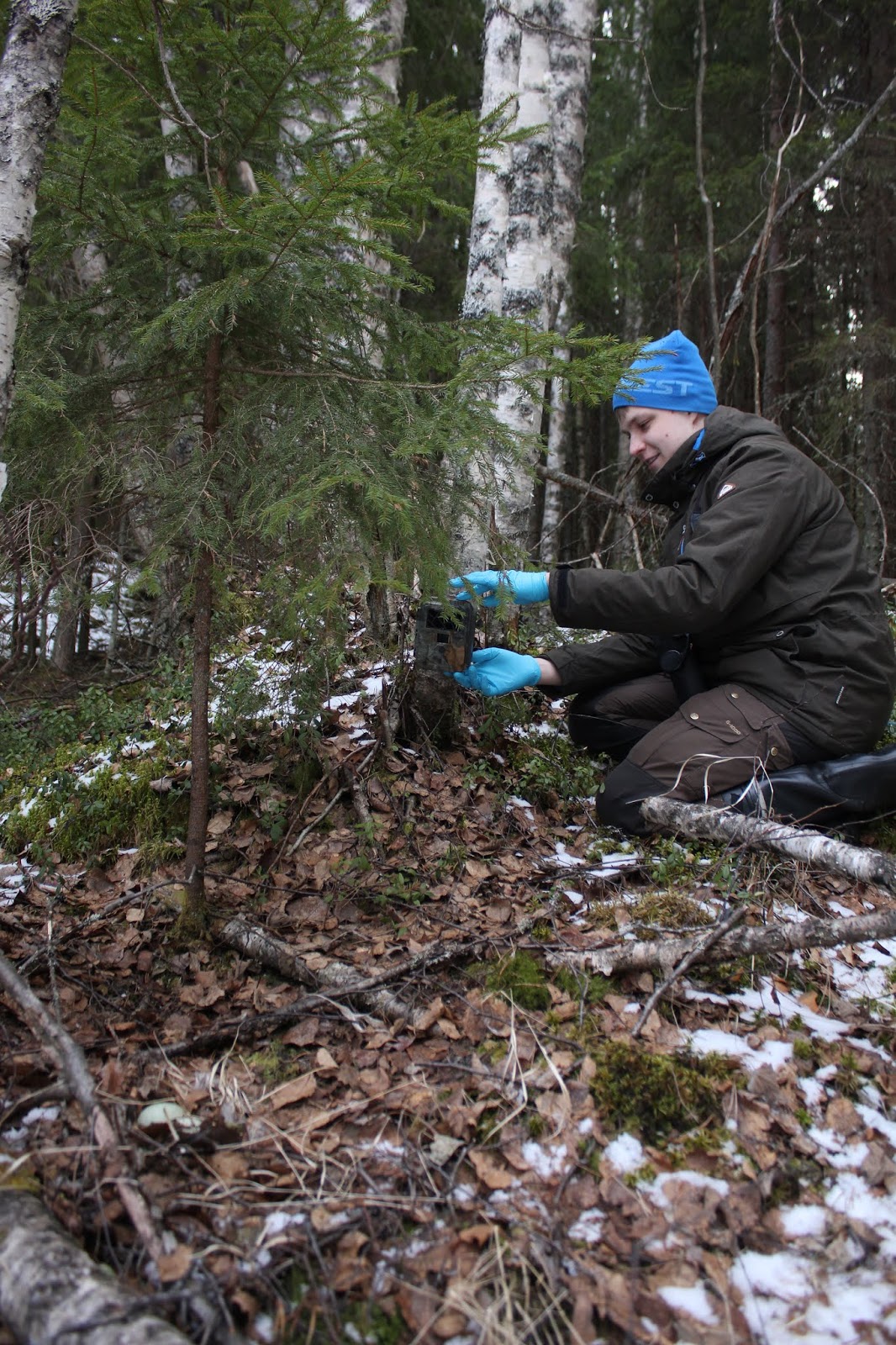
In order to carry out this study, my fieldwork has been done in Evo along winter and spring 2020, through bird sightings, camera trapping, faeces tracking, and snap-trapping.

Thanks to the fieldwork, I found out that bird’s activity depends on the season and the habitat. The results revealed higher activity in vernal pools in spring while in winter no differences have been observed between both habitats. Moreover, my results highlighted that the activity and species richness of large mammals were significantly higher by vernal pools than by permanent wetlands; and herbivorous mammals such as moose, roe deer and hare, seemed to visit more often vernal pools than permanent wetlands. In the case of small mammals, despite no difference in abundance between both habitats, their activity changed monthly within the two habitats. In parallel, I conducted dissection of rodents to determine their age and their physical conditions (length, weight, body mass index etc.) but no differences have been found.

Those results demonstrated that vernal pools are providing high benefits to mammals and birds, which should be considered in forest management and in the context of climate change.

In July 2020 I graduated in my University in France and in the next year, the October 1st, 2021, a manuscript based on my research has been accepted for publication in the Global Ecology and Conservation Journal: https://doi.org/10.1016/j.gecco.2021.e01858

Spending the 6 months in LBS has been an amazing experience. I met fantastic people and I am very grateful for their help during my research.

I want to thank the foundation for supporting my research.

Charly Dixneuf is 2020 LBAYS grant recipient


torstai 12. tammikuuta 2023

Investigation of boreal forest integrity for the conservation of mammal species in Finland

Lammi Biological Station has been my home for almost two years and is where I mainly conduct my doctoral research, which is the analysis of forest ecological integrity in relation to anthropogenic pressure. For this reason, I conducted my research fieldwork in forests privately owned by Finnish landowners living in the Kanta-Häme region, which is characterized by patchy forests and agricultural landscapes, making it ideal for the assessment of forest integrity. Thanks to this, I have the opportunity not only to learn more about the forests surrounding the Lammi area, but also about the local people and their views on the importance of forest corridors for the conservation of wildlife, especially for native species to boreal forests.

Forest integrity is often difficult to fully understand and measure because it describes the completeness and functionality of an ecosystem and its ecological processes, especially in relation to its natural state. In my doctoral research, using the Forest Landscape Integrity Index (the first consistent measure of ecological integrity for all the world’s forests), I am analysing the state of boreal forests in relation to the presence, abundance and richness of mammal species monitored through the Wildlife Triangle Scheme. Thanks to this, it will be possible to identify threshold values for forest integrity and set specific conservation targets for wildlife conservation, that should aim to increase favorable habitats for native species. Considering this, from the results of my first research, it is possible to observe that the species native to the Finnish boreal forests have a higher abundance in forests with higher integrity (in particular, mountain hare, lynx, moose, wolverine, and pine marten) than non-native and/or northly expanding species whose abundance increases in forests with lower integrity, indicating a greater adaptive capacity of these species, even in areas with higher human presence. 


In my research on camera-trapping, I will also evaluate forest integrity as a variable characterizing forest corridors, which are important components of landscape connectivity for allowing the movement of animals between habitat patches. Forest connectivity, including forest integrity, is influenced by human activities and affects wildlife. This analysis will be significant because it will be possible to understand which specific features the corridors need to constitute efficient elements for favoring the conservation of native species and for predicting and avoiding the spread of invasive species.

Francesca Malcangi is a 2022 LBAYS grant recipient. You can find out more about Francesca from her website: https://francescamalcangi.eu/ and on Twitter: @francescamalca3

torstai 24. maaliskuuta 2022

Vuodenaikaisvaihtelun tutkimukset Pääjärvellä

Koekalastus jään alta
Saavuimme Lammille aurinkoisena marraskuun päivänä 2020. Tutustuttuamme asemaan ja henkilöstöön, lähdimme pidemmittä puheitta ottamaan järveltä näytteitä ja mittauksia ja näin alkoi harjoittelumme Lammilla. Tulimme Lammille keräämään aineistoja pro gradu -tutkimuksiimme aloittamalla tutkimusryhmäharjoittelun, joka kesti kuusi viikkoa. Tutkimustemme aiheet olivat melko erilaiset, kun toinen meistä tutki vuodenaikaisvaihtelun vaikutuksia ahvenen ja särjen elohopeapitoisuuksiin sekä biokertymään, ja toinen tutki vuodenaikaisvaihtelun vaikutuksia kalayhteisön rakenteeseen. Tästä huolimatta käytimme samaa aineistoa. Aineiston keräys ravintoverkkotutkimusta varten oli aloitettu jo maaliskuussa 2020, mutta me tulimme mukaan marraskuussa. Harjoittelun aikana pääsimme mukaan myös muihin työtehtäviin, kuten pohjaeläin- ja planktontutkimuksiin, ja opimme samalla paljon kaloista ja järven ekologiasta.

Koekalastus avovesikaudella
Vuodenaikaisvaihtelua tutkittiin koekalastamalla kuukausittain biologisen aseman viereisellä Pääjärvellä. Koekalastusta tehtiin avovesikaudella veneestä kätevästi muutamassa päivässä. Jäisenä aikana puolestaan verkkokalastus tapahtui jään alta, kesti viikkoja ja vei monta tuntia päivästä. Jotta saatiin tietoa vallitsevista oloista jokaisena kuukautena, järvestä mitattiin myös lämpötila, happipitoisuus ja valoisuus, sekä talvella jään paksuus ja lumen syvyys. Saimme myös käyttöömme Pääjärven pitkäaikaiseen seurantaan liittyviä fysikaalis-kemiallisia mittauksia jokaiselta kuukaudelta. Kalayhteisön rakenteen tutkimuksessa käytettiin tietoja jokaisesta pyydystetystä kalasta jokaisena kuukautena, kun puolestaan elohopeatutkimuksessa valittiin jokaiselta kuukaudelta pieni otanta särkiä ja ahvenia tutkittavaksi. Harjoittelun aikana olimme mukana koekalastuksissa, mutta suurin osa ajastamme Lammilla meni kalalaboratoriossa kalojen kudosnäytteiden keräämisessä.

Työnteko ei tuntunut työltä vaan ennemminkin lomalta. Poikkeuksena ehkä talviset kenttäpäivät lumimyrskyssä ja kahdenkymmenen asteen pakkasessa. Työnteko oli leppoista, jossa myös huomaamattamme opimme paljon. Aikamme Lammilla meni nopeasti ja meillä oli niin mukavaa, että halusimme jatkaa työntekoa ja tulimmekin takaisin seuraavana vuonna vielä kolme kertaa alkuperäisten suunnitelmien vastaisesti. Pääsim

me omien töidemme ohessa myös tutustumaan muunlaisiin tutkimustekniikoihin, kuten leikkimään vedenalaisella dronella ja kurkkaamaan mitä Pääjärven pinnan alta löytyy. Lammilaiset ottivat meidät hyvin vastaan ja opastivat töihin hyvillä mielin. Tunnelma oli kotoisa ja yhteisöllinen. Saimme asemalta käyttöömme myös monia työhömme tarvittavia laitteita ja tavaroita. 


Aineistonkeruun loputtua vetäydyimme kenttätehtävistä aineiston tallennukseen ja kirjoitustöihin. Gradumme valmistuivat ja saimme mielenkiintoisia tutkimustuloksia Pääjärven kalayhteisöstä, sekä ahvenen ja särjen elohopeapitoisuuksista ja biokertymästä:

Elohopeatutkimuksessa havaittiin vuodenajanvaihtelun vaikuttavan ahvenen ja särjen lihaksen elohopea määriin. Vuodenajanvaihtelun vaikutus oli selkeästi vahvempaa ahvenella, joka kerryttääkin enemmän elohopeaa syömällä kalaravintoa, kun taas särki suosii vähemmän elohopeaa sisältävää ravintoa. Pääjärvellä etenkin karike ja hiekka maistuivat särjelle. Molempien lajien elohopeamäärät olivat korkeimmat talvella kalojen nälkiintyessä ja keväällä ja alkukesällä kalojen kutuaikana. Alhaisimmat elohopeamäärät löytyivät syksyllä kasvukauden lopulla, mitä ennen kalat kasvoivat pituutta ja kerryttivät rasvavarastoja kesän suotuisissa ravinto- ja lämpötilaolosuhteissa, mikä vähensi kalojen lihaksessa olevan elohopean määrää.

Emmi Eerola ja Helene Laiho

LBAYS apurahan saajat vuonna 2021

sunnuntai 6. maaliskuuta 2022

Fish, glass, and tubing

It's June 2020, and while the weather is quite warm and sunny at Lammi Biological Station, I'm working indoors at the animal research facilities. The room I'm in is dimly lit; the temperature is something around 15°C, and thick window blinds cover the large windows that run along the south wall. We don’t want any light in here that we’re not in control of, and mostly we just want it fairly dark. The colors of this room are tank green, metallic wall white, opaque tube white, wire black, and wood board beige. 


The respirometry measurement setup


This is the experimental fish hall. For the past few months, my collaborators and I have been busy preparing an intricate system for doing a special kind of measurement on fish. Large tanks have been cleaned and modified, tubes measured and connected to all kinds of inlets and outlets, probes have been calibrated and a house-made electronic system has been set up to control it all. Submerged in the water-filled tanks are several small cylindrical glass chambers. In each chamber is a little fish; A juvenile Atlantic salmon. These glass chambers are more or less sealed so that nothing enters or leaves, though a few semi-transparent tubes, a miniature pump, and an oxygen probe make a closed circuit with the chamber, measuring the chambers oxygen content. Another set of tubes connects to a computer-controlled pump that replaces the water in the chamber every 20 minutes. The fish in these closed-loop chambers are slowly consuming the oxygen within them, and by measuring how quickly the oxygen decreases, we can calculate the fish’ rate of oxygen consumption. These chambers are called respirometers, and the procedure is called respirometry. The measured rate of oxygen consumption is used as a proxy for the fish' metabolic rate (their rate of energy consumption). Since we want to measure the metabolic rate when the fish is at rest (standard metabolic rate), the tank is covered with a thick tarp to keep the light out, and the fish stay in their chambers overnight.


One juvenile salmon inside one of our respirometers. (Photo: Sergey Morozov)


These measurements were a part of my doctoral research project, -and of our research group's larger overarching project. In this particular project, we're exploring the effects and mechanisms of vgll3, a gene that seems to have important effects on sexual maturation in Atlantic salmon.


Atlantic salmon, like all other animals, go through a process of sexual maturation as they age and develop. After having migrated out of their home river, these salmon spend some time at sea to grow large as they feast on the plenty of prey that they find there. Eventually, they return to their home river to reproduce. However, there is a lot of variation in the timing of maturation; Some individuals spend a short time at sea and return at a fairly small size, while others stay longer. What causes this variation? vgll3 has been shown to associate with some of this variation, and this gene comes in two different alleles (variants), E for early- and L for late maturation. We want to learn more about how this gene works; What are the mechanisms that make this gene do what it does?


This question was the reason these fish were put into these small glass chambers. Some of these juvenile salmon had the vgll3*EE genotype, while others had the vgll3*LL genotype; What we wanted to test was if there was a difference in these fish' metabolic rate. An earlier experiment had shown that fish with different vgll3 genotypes grow differently, and we wanted to see if this could be caused by a difference in metabolic rate. In a sense, we were asking if vgll3 might be something like an "energy allocation gene".


Months later, analyzing the data gathered from this project, we eventually found that there was no detectable link between vgll3 genotype and standard metabolic rate in the fish in our experiment*, indicating that the differences in maturation might not be connected to the resting metabolism and energy expenditure at the early life stage. Although this might sound like we found "nothing", it's still an important finding; Sometimes, ruling out a mechanism could be just as important as counting one in. Interestingly, in a similar, later experiment we did find some connection between vgll3 (plus another gene) and another metabolic trait, namely maximum metabolic rate**. You can read more about these findings by looking up the two research articles shown at the end of this post.


This project took a lot of effort to set up and run successfully, but it was also very fun and rewarding, and I'm incredibly grateful for my amazing collaborators and coauthors that turned this project into what it became. Being stuck inside a cold and dim hall isn’t so bad when you get to build cool projects, solve problems, and see it all work in the end. Whenever it may be, I'm looking forward to the next time.


A big thanks to Lammi Biological Station for housing our project at their premises, -especially for being so accommodating during the challenging COVID-19 pandemic. Also, thanks to the LBAYS foundation for their grant which supported this project.


Eirik Åsheim is a 2020 LBAYS grant recipient


*Åsheim, E. R., Prokkola, J. M., Morozov, S., Aykanat, T., & Primmer, C. R. (2021). Standard metabolic rate does not associate with age-at-maturity genotype in juvenile Atlantic salmon. Ecology and Evolution, 00, 1– 14. https://doi-org.libproxy.helsinki.fi/10.1002/ece3.8408


**J.M. Prokkola, E.R. Åsheim, S.M. Morozov, P. Bangura, J. Erkinaro, A. Ruokolainen, C.R. Primmer, T. Aykanat (2022, in production). Genetic coupling of life-history and aerobic performance in Atlantic salmon.

Proc. R. Soc. B.


maanantai 17. tammikuuta 2022

Starting from scratch: A journey of a man and his salmon


I first arrived at the Lammi Biological Station during the summer of 2017. At the time, the Evolution, Conservation and Genomics Research group led by Craig Primmer was beginning to rear juvenile Atlantic salmon at the station. This all started in the greenhouse down by the lake. Thousands of alevins (embryonic salmon still containing a yolk sac) made their way from a LUKE hatchery to begin a pilot study using water from Pääjäarvi. As this was success with only a few setbacks, construction then started to make a larger and more high-tech facility on the main grounds of the Lammi Biological Station.

Placing the salmon alevins into the tanks
For my PhD project, I have two main experiments. The greenhouse experiment completed in 2017 and a larger experiment running in the new facility ending in autumn 2019. For this first experiment, I looked at lipid class concentrations in 49 individuals. We found that there was a difference in the concentration of several classes between female and male individuals. I have published an article with the main results of the pilot study and you can find the article here: https://doi.org/10.1016/j.cbd.2021.100810.

The main project consisted of rearing thousands of Atlantic salmon for 2 years. The main goal of this experiment is to see how a gene of interest, vgll3, found in Barson et al. 2015 effects the lipid content in the juvenile and mature parr stage of Atlantic salmon. The duration of this experiment was determined to allow for the occurrence of mature parr during the final sampling period in September and October 2019. 

I have then taken the collected samples to the Viikki campus in Helsinki to do laboratory analysis consisting of DNA/RNA extraction, lipid extraction and mass spectrometry runs to be able to look at the connection between vgll3 genotype and lipid content. Mass Spectrometry runs will start very soon on these samples. J

Tissue dissections for lab work
I have been working hard in Helsinki trying to get as much lab work done and lots of collaboration with Lipidomics unit. However, the original plan was delayed many times due to the pandemic but finally; there has been lots of progress during this past year. I am now in the final stage of my PhD and hope to be done by spring 2022. I have completed the first part of laboratory work and am now waiting to run the samples on the mass spectrometry. This will allow me to get the lipid lasses and species for the individual salmon used in the final data set.

Working and living at the station for period throughout my PhD have been some of the best moments of my PhD. Life goes by more slowly and calmly when focusing on the task at hand. The location has always been a much-needed break from Helsinki and the sauna just adds to this. To do this day, the station sauna is one of my favorites and always brings a smile to my face.

The Lammi Biological Station was an ideal place to run this experiment and truly was a home away from home. I feel very lucky to have been able to visit as much as I could during the experiment and get the fish rearing facility up and running. It was always amazing to see the fish grow over time and see them used for other researchers and projects happening in our group. It’s now been over 2 years since I have been back but I hope I can change that soon and breathe in the crisp autumn air at the Lammi Biologcal Station!

Andrew House is a LBAYS grant recipient

perjantai 9. huhtikuuta 2021

Water browning in the Evo area


Over the last decades, some surface waters (lakes, rivers) have become browner. Such phenomenon was observed throughout Finland and is referred to as water browning or brownification.

I have been studying browning in the Evo area since 2019 when I first came to Lammi Biological Station for a 2-month internship. I learned that browning led to a decline in aquatic invertebrate global abundance in Evo, and started to wonder about the impact of forestry activities practiced in the region on water colour.

Lake Valkea-Kotinen, my favourite place

I decided to come back in 2020 to carry on my studies on browning for my master’s thesis. My purpose was to investigate the contribution of forestry activities to changes in colour in Evo lakes and to highlight different aquatic invertebrate communities along a browning gradient.

My stay at LBS was very convenient and enjoyable as it is very close from Evo, where I had to perform fieldwork. Fieldwork was definitely my favourite part of my study. Evo is a beautiful area with its forest and lakes. I almost did not feel like I was doing fieldwork since I was so amazed by the Evo landscape.

Figure 2: invertebrate sampling
My fieldwork consisted in sampling aquatic invertebrates in 17 lakes of different characteristics: beaver-influenced, clear water, brown water and lakes located in protected areas. For that, I used activity traps (a method that has been traditionally used in Evo invertebrate surveys) in June 2020. Invertebrates were identified on the lake sites.

This fieldwork session highlighted that Evo lakes had different invertebrate communities as expected. For example, I found that copepods were negatively affected by browning, while isopods had higher abundance in brown waters. Other invertebrate families were affected by other environmental variables such as trichopterans that were found in higher abundance in protected lakes.

In parallel, I was also developing a method to identify clearcutting activity based on tree canopy cover. With this method, I was able to show that a high surface of clearcutting in the catchment of a lake led to high lake water colour. This demonstrated the contribution of forestry practices to the ongoing brownification of lakes.

Other interesting results came out of this study. Beavers, for instance, substantially affected lake water colour, which shows why their presence need to be considered in water quality studies in beavers distribution area. This study also demonstrated that lake cover had a significant impact on lake water colour. The more upstream lakes a lake has in its catchment, the less coloured it is. Adaptation of catchment management practices could be drawn out of these results.

More sampling
Lammi Biological Station is a place where many people share their research interest and their culture. I met many people that helped me with my research and that I could also help in return. It is always such a great experience to come to the station.

I successfully graduated in September 2020 in France and am in the process of writing scientific papers on the findings in my master’s thesis. In Finland, I found my vocation to carry out a research career. In June 2021, I will start a PhD at Helsinki University on brownification. I want to thank the foundation for supporting me throughout this journey in Finland.

Clarisse Blanchet is a 2020 LBAYS grant recipient

keskiviikko 28. lokakuuta 2020

Doing research (not about a pandemic) in a pandemic


In March 2020 I arrived at Lammi Biological Station, where I was planning to stay for most of the coming 3 Months to perform the first set of experiments for my PhD. I aim to research the potential of insects to adapt to climate change, and for this I use Glanville fritillary butterflies (Melitaea cinxia) originating from different places across Europe. By rearing these individuals from different climates (From Finnish ones used to cold temperatures, all the way to Spanish ones, that are used to much warmer conditions) under controlled temperatures in the laboratory, we can see if there are differences between populations. This will help understand mechanisms behind adaptation to different climates, and thus also understand how these butterflies might respond to future climate change. Glanville fritillary butterflies have a complex life cycle: they hatch from the eggs as small caterpillars, that go through 5 instars before going to diapause for the winter. After diapause, they go through 2 more instars and then pupate after which adults eclose from the pupae, who lay eggs, and the cycle can start again. These different life stages and accompanying strategies allow us to study the effects of environmental stress on each one of them.

During the spring, I planned to rear Spanish post-diapause larvae, who originate from different climates within Spain to adulthood at different temperatures to see if there would be differences in mass, development time, wing patterns or flight metabolic rate. Besides that, I also planned to rear offspring from Finnish, Estonian, French and Spanish butterflies from egg to diapause at different temperatures and monitor the mass increase, development time and fat content of the larvae. These were big plans for one spring: Detailed experiments like this provide a lot of information, but also require much work. Besides weighing more than 3000 small caterpillars (some of them multiple times) and taking pictures of their wings, the animals also have to be checked and fed with fresh Ribwort Plantain (Plantago lanceolata) leaves every day. In order to make this possible, I worked with a great team of two research assistants and a BSc student.

All of us were ready and excited to start the experiments, but two weeks after starting the COVID-19 pandemic broke loose. This brought great uncertainty and many questions: “will we be able to continue the experiments?” “Even just take care of the butterflies?” “Will we be able to visit home?” “What if one of us gets ill?”. Luckily, due to the remote nature of Lammi Biological Station and the fact that we were already present, we could continue doing our experiments and no butterflies had to be abandoned. With strict restrictions on visitors, luckily nobody got ill, but this also meant that all of us stayed at the station for the entire duration of the experiment. A strange situation, in which you all of a sudden become even more focused on the research, but also dependent on each other. I have memories of staying in quarantine together with the entire family of “Lammi people”. Of working long days in the lab and once-a-week grocery trips on Friday evening. Of thinking about experiments, and private sauna nights, and of endless walks in the beautiful Lammi forests on days off and swims in the lake after work.

Doing research during a pandemic is not simple and provided many challenges but with some luck and hard work by many people I managed to complete all of my planned experiments. Analysing the data takes perhaps even more time than performing the experiments and thus not all of the results are in yet, but the first graphs look very promising and give plenty of ideas for new research next year. Hopefully then in better circumstances, although every bad situation has a silver lining: I definitely had the best quarantine work, company and location of all!


tiistai 15. syyskuuta 2020

Spread of fungal communities in Finland


Mushrooms are  everywhere in Finland, from polypores to tasty forest floor morsels. But what do these community structures actually look like as a whole? Ecologists know that the richness and abundance of organisms vary with different environmental conditions; the tapestry of an old forest will be totally different from a tree plantation. But these patterns have been considerably less studied for fungi than other kingdoms, and their unique and also less known dispersal abilities complicate the picture further.

The purpose of my master's thesis was to get a basic picture of the spread of fungal communities across middle and southern Finland, specifically how the communities change over distances (large and small) and between different habitat patches (urban and natural). To see what fungi are there, my collaborators and I took samples of soil and spores in the air. We did this in five locations across the country, attempting to cover a decent spread of landscapes, and in each location there were six plots (divided between urban, natural, and edge), to pick up the finer scale changes.

Spore sampler

The site of my sampling was near Lammi Biological Station, where I stayed for two weeks at the end of August 2019. This beautiful area served as the base, from which I would drive to Lahti every few days for my urban samples and where I would do some basic sample processing, coordinating, and writing in the evenings. Field data collection, as always, was my favorite part of the studies. I spent the following winter analyzing the fungal OTUs I received after DNA sequences of my samples returned. Much of the time was spent going over and over the location based charts, curiosity finally being assuaged of what all mushroom species I might find in Finland.

 Then finally, this spring I submitted my thesis with all of my findings. Between Helsinki and Joensuu, fungal communities do not show distance decay to the rate I would have expected. Perhaps it's due to the relative homogeneity of the landscape at the larger scale? But this is speculation, and I am eager to see future studies that reach into the mechanisms and explanations, as well as replicating similar methodology in totally separate regions of the world. Anyway, the perhaps more striking results were the differences between urban and natural habitat types, providing even more evidence of the drastic effects of anthropogenic change on other populations.

Colleagues in my research group ran parallel analyses from my data, focused more on this aspect. It led to a paper published in ISME Journal, for which I am a co-author, titled 'Fungal communities decline with urbanization—more in air than in soil'.

 I am grateful to the foundation for providing the grant that made this research possible.

Brittni Joette Crosier is a 2019 LBAYS grant recipient

keskiviikko 15. tammikuuta 2020

Typpi vai fosfori? Kumpi rajoittaa Vanajaveden kasviplanktonin kasvua?


Alkukesän kasviplanktonlajistoa

Kasviplankton tarvitsee kasvaakseen mm. valoa ja ravinteita. Vesistöjen ravinnepitoisuudet vaihtelevat vuodenaikojen vaihtuessa. Esimerkiksi järvien jääpeite talvella, lumien sulaminen keväällä ja kuuma, aurinkoinen kesä vaikuttavat siihen, kuinka paljon mm. Vanajaveden ja Vanajan reitin vedessä on typpeä ja fosforia, ja minkälaisiin molekyyleihin nämä alkuaineet ovat milloinkin sitoutuneet. Kasviplankton muodostaa vesikasvien ohella sisävesien ravintoketjun tärkeän perustan. Mikäli vesistössä on paljon ravinteita, on myös näitä auringon valoa biomassaksi muuntavia perustuottajia runsaasti, enemmän kuin täysin luonnontilaisissa vesistöissä. On täysin luonnollista, että vesistöihin päätyy ravinteita sitä ympäröivältä maa-alueelta, mutta ihmistoiminta usein voimistaa tätä nk. rehevöitymistä. Merkittävä rehevöityminen johtaa mm. kalalajiston särkikalavaltaistumiseen, mahdollisesti myrkyllisten syanobakteerien massaesiintymien yleistymiseen ja jopa alusveden hapettomuuteen ja kalakuolemiin.
Vanajavedessä on jo 1950-luvulta lähtien havaittu rehevöitymisen merkkejä. Nykyään Vanajaveden ekologinen tila on tyydyttävä ja Vanajaveteen johtavan Vanajan reitin ekologinen tila jopa välttävän puolella. Tämä johtuu pääosin valuma-alueelta tulevasta kuormituksesta ja sen aiheuttamista korkeista ravinnepitoisuuksista vesistössä. EU:n vesipuitedirektiivin tavoitteena on saada kaikki suomalaiset järvet vähintään hyvään ekologiseen tilaan viimeistään vuoteen 2027 mennessä.


Pro gradu -tutkielmassani selvitin rajoittaako liukoinen eli välittömästi kasviplanktonin käytössä oleva typpi tai fosfori kasviplanktonin kasvua. Kasvatuskokeet tehtiin Lammin biologisella tutkimusasemalla vuosina 2016-2017 viidesti, jotta vuodenaikaisvaihtelut saatiin selville. Näytteenottopaikkojakin oli viisi: jokimaisella Vanajan reitillä Aulangon rautatiesilta, Kirstulansalmi ja Mierolansalmi, sekä Vanajaveden järviosuudella Ruskeenkärki ja Sääksmäki.


Jokimaisen osuuden ja järviosuuden vesissä oli
jopa silminnähtäviä eroja.
Kaikilla näytteenottopisteillä kasviplanktonin kasvu oli ympäri vuoden pääosin fosforirajoitteista, kuten suomalaisissa sisävesissä yleensäkin. Lievää typpirajoitteisuutta oli kuitenkin havaittavissa elokuussa Vanajan reitillä Aulangon alueella. Muilla pisteillä kasviplankton oli kesän aikana ottanut molemmat tutkimani ravinteet niin tehokkaasti käyttöönsä, että elokuussa sekä liukoisen typen että fosforin saatavuus rajoitti kasviplanktonin kasvua. Ylimääräiseen leväkasvuun tarvittaisiin siten molempia ravinteita samanaikaisesti. Kokeideni perusteella Sääksmäen järvipisteellä typen ja fosforin yhteisrajoitteisuus alkoi jo heinäkuussa.


Kasvatuskoe käynnissä. Kasvatushuoneen lämpötila 
ja valaistus säädettiin vallitsevia luonnonoloja mukaillen.
Veden virtaussuuntaan nähden kahden ensimmäisen näytteenottopisteen välissä olevan Paroisten jätevedenpuhdistamon vaikutus Vanajan reitin ravinnepitoisuuksiin oli vähäinen, ja pienenee entisestään, kun puhdistamolle rakennetaan uusi jäteveden käsittely-yksikkö lähivuosien aikana. Erityisesti puhdistamolta tuleva pistemäinen typpikuormitus vähenee, mikä on askel kohti Vanajaveden parempaa ekologista tilaa. Vesistöä ympäröivän alueen peltovaltaisuus puolestaan näkyi mm. veden ravinnepitoisuuden nousuna lumiensulamisen aikana. Peltojen rehevöittävää vaikutusta vesistöön on mahdollista säädellä mm. pitämällä lannoitusmäärät maltillisina. Jotta Vanajaveden ja Vanajaveden reitin ekologinen tila saadaan hyväksi, on tulevaisuudessa sekä haja- että pistekuormitusta vähennettävä edelleen. Onneksi ravinnepäästöjen hillitsemiseksi ja vesistöjen kunnostamiseksi on olemassa monia erilaisia lähestymistapoja ja uusia menetelmiä kehitellään jatkuvasti.

Henna Raitanen


perjantai 13. joulukuuta 2019

Tikkojen kolojen ja kolopuiden hyöty metsäluonnon monimuotoisuudelle


Tikat ovat metsäekosysteemin avainlajeja erityisesti boreaalisilla alueilla, joilla pääosa metsien koloista on niiden tekemiä. Tikat kovertavat pesäkoloja, joita monet muut lintu- ja nisäkäslajit sekä erilaiset selkärangattomat käyttävät myöhemmin. Tikkojen kolot ovat myös monien metsän sieni-, jäkälä- ja sammallajien elinpaikkoja. Huolimatta tikankolojen keskeisestä asemasta pohjoisissa metsäekosysteemeissä, kolojen määriä, ominaisuuksia sekä kolopuiden säilymistä on tutkittu tähän asti sangen vähän.

Olen seurannut tikkojen kolopuita yli 30 vuoden ajan Lammin seudulla osana metsälinnuston ekologian tutkimusta. Kolotutkimus on keskittynyt Evolle noin 170 neliökilometrin metsävaltaiselle alueelle. Vuotuinen maastokausi kestää tyypillisesti helmi-maaliskuun vaihteesta heinäkuun puoleenväliin. Kevään ja kesän säät vaihtelevat, ja maastotöissä olen pyrkinyt hyödyntämään mahdollisimman hyvin tyynten ja heikkotuulisten päivien koko valoisan ajan. Parasta maastokaudessa on liikkuminen Evon erämaisissa metsissä ja päästä seuraamaan kevään ja kesän etenemistä ”paikan päällä”.

Keväällä tavoitteena on kartoittaa tutkimusalueen tikkareviirit sekä paikantaa todennäköisimmät pesimäpaikat ja etsiä mahdolliset uudet pesäkolot. Pesäpuista ja -koloista sekä metsäympäristöstä mitataan maastossa erilaisia ominaisuuksia, kuten metsän ikä, metsätyyppi, pesäpuun laji, koko ja kunto sekä koloaukon korkeus ja ilmansuunta. Kolopuiden tiedot sijanteineen tallennetaan paikkatietojärjestelmään, jossa niitä voidaan tarkastella yhdessä mm. erilaisen satelliitti-, ilmakuva- ja karttatiedon kanssa. Myös vanhat kolopuut käydään tarkastamassa maastokauden aikana, ja niiden käyttöä seurataan vuodesta toiseen niin kauan kuin kolot ovat vielä käyttökelpoisia.
Tutkimuksen tuloksia on julkaistu toistaiseksi pohjan- ja pikkutikan pesäpuiden ja -kolojen ominaisuuksista sekä niiden säilymisestä ja käytöstä kolojen eliniän ajan. Näiden lajien, sekä myös muiden tikkalajien vielä julkaisemattomien tietojen perusteella kolopuut ja niiden yksittäiset kolot säilyvät usein ulkoisesti käyttökelpoisina jopa kymmeniä vuosia, mutta muut kololintulajit, mukaan lukien eri tikkalajit, käyttävät niitä pääosin vain kolon ensimmäisten vuosien aikana. Pääsyynä hyvin vanhojen kolojen vähäiseen käyttöön lienee kolojen fysikaalisten ominaisuuksien, kuten lämmöneristyskyvyn ja suojaavuuden heikkeneminen niiden ikääntyessä. Kolopuiden ja kolojen ominaisuudet kuitenkin vaihtelevat puulajin ja puun kunnon mukaan; lahoavissa lehtipuissa sijaitsevat kolot säilyvät yleensä selvästi lyhemmän aikaa kuin havupuiden kolot. Toisaalta suurissa elävissä haavoissa ja keloutuvissa männyissä kolot säilyvät pitkään, ja tällaisia vanhoja koloja myös käytetään keskimääräistä enemmän ja pidempään.

Tikkojen sekä omia koloja kovertavien hömö- ja töyhtötiaisen kolot ovat yleensä kuolleissa, huonokuntoisissa tai jollain tavoin vaurioituneissa puissa. Varsin usein samassa kolopuussa on useampia, eri lajin kovertamia koloja. Kolojen määrä on selvästi suurempi luonnontilaisen kaltaisilla metsäalueilla kuin talousmetsissä. Sekä kololintujen että muiden koloja käyttävien eliöiden kannalta olisikin tärkeää, että mahdollisimman moni nykyinen kolopuu ja muilta ominaisuuksiltaan samantyyppinen mahdollinen tuleva kolopuu voitaisiin säästää metsänhoitotoimissa.
Kolotutkimus ja koko Lammin seudun pitkäaikainen metsälintututkimus on viimeisen kymmenen vuoden aikana toteutettu pääosin omalla rahoituksella. Tutkimuksen jatkosta on päätetty aina vuosi kerrallaan, ja Lammin biologisen aseman Ympäristötutkimuksen Säätiön apuraha vuonna 2018 oli tärkeä seurantojen keskeytymättömälle jatkumiselle.

FT Timo Pakkala on Itä-Suomen yliopiston spatiaalisen ekologian dosentti ja vuonna 2018 LBAYS apurahan saaja

perjantai 21. joulukuuta 2018

Ravinto ja pesäpedot sorsien pulmana kosteikoilla


Minulle myönnettiin kesälle 2017 apuraha pro gradu -työhöni sorsien lisääntymiselinympäristövalinnasta. Tarkoituksenani oli perehtyä elinympäristötekijöiden vaikutukseen sorsiin pesintä- ja poikuevaiheessa. Tutkin voiko näiden kahden vaiheen välillä olla trade-off-tilanne, jossa sorsaemo joutuu valinnassaan suosimaan jompaakumpaa toisen kustannuksella. Erityisen mielenkiinnon kohteena tässä tutkimuksessa oli vieraslajipetojen, supikoiran ja minkin, merkitys sorsanpesien rosvoina.

Toteutin työni ohjaajani Sari Holopaisen kanssa kahdella tutkimusalueella: metsävaltaisella ja vesistöiltään karulla Evon retkeilyalueella sekä rehevällä maatalousvaltaisella Maaningalla. Evolla tutkimusta oli helppoa ja mielekästä tehdä Lammin biologiselta asemalta käsin. Tutkimuskosteikkoihimme kuului karuja järviä, majavalampia ja kausikosteikoita Evolla sekä reheviä järviä ja tulvikoita Maaningalla. Jokaisella kosteikolla laskimme kesän aikana sorsaparit ja poikueet, pyydystimme vesiselkärangattomia sekä teimme predaatiokokeen, jossa seurasimme riistakameralla keinotekoisia pesiä, joissa oli kasvatettujen sinisorsien munia. Näin saimme tietoa kosteikoiden sorsamääristä, sorsien ravinnon määrästä sekä pesiä uhkaavista pedoista ja pesien saalistusriskistä.

Tutkimuksemme ajoittuivat loppukeväästä keskikesään.  Jos hyttysiä ei lasketa, niin mikä voisikaan olla nautittavampaa kuin viettää tuota eloisinta vuodenaikaa kauniilla kosteikoilla mitä monipuolisimmissa luontoympäristöissä. Aivan täysin mutkattomasti aineiston keruu ei kuitenkaan sujunut. Kevätkesä 2017 oli hyvin kylmä, mikä näkyi niin sankan lumisateen viivästyttäminä sorsalaskentoina kuin jäätyvinä sorsanmuninakin. Ennen kaikkea huonot olosuhteet näkyivät sorsien onnettomana poikuetuottona. Evon ensimmäisessä poikuelaskennassa havaittiin poikueita vain kahdella järvellä.

Tarkemmat tulokset poikueiden osalta jäivät siis laihaksi, mutta sorsaparien esiintyminen jo osoitti, että selkärangattomilla oli positiivinen vaikutus sorsien esiintymiseen. Merkittävin vaikutus oli kuitenkin kosteikon ominaisuuksien sijaan alueella. Maaningan rehevissä ympäristöissä sekä pareja että poikueita oli merkittävästi enemmän. Pesien selviytymistodennäköisyys oli taas Maaningalla pienempi, johtuen ennen kaikkea maatalousympäristössä viihtyvien varislintujen runsaudesta. Harakka olikin tutkimuksen yleisin pesiä ryöväävä laji. Tulokset kertovat, että alueiden välillä on trade-off-tilanne: sorsat suosivat reheviä ruokailualueita, suuremmasta pesänmenetysriskistä huolimatta. Tämä näkyy myös sorsien poikuetuotossa, sillä vaikka poikueiden lukumäärä oli Maaningalla suurempi, Evolla suurempi osuus pareista onnistui saamaan poikueen vesille. Vieraslajien merkityksestä taas kertoo se, että melkein kolmasosa kaikista ryövätyistä pesistä tuli supikoiran ryöväämäksi. Minkki oli tutkimuksessamme vastuussa vain yhden pesän tuhosta.

Sorsapopulaatiot – erityisesti juuri rehevillä vesillä – ovat taantuneet Suomessa voimakkaasti viime vuosikymmeninä ja tämän tutkimuksen avulla voimme ymmärtää enemmän sorsien lisääntymiselinympäristöjen merkityksestä ja niihin liittyvistä ongelmista. Tästä iso kiitos kuuluu myös tälle säätiölle, joka rahoituksellaan mahdollisti tutkimukseni toteutusta.

Elmo Miettinen on vuonna 2017 LBAYS apurahan saaja

keskiviikko 31. lokakuuta 2018

Variation in biomass and soil carbon stocks across Pääjärvi catchment area – a landscape ecology and GIS approach


Pääjärvi catchment and biomass
sample points
My professional duties and my MSc and PhD topics are all related to forest ecosystems, especially to forest ecology, forest monitoring and GIS as well. The title of my MSc Thesis was: “Variation in biomass and soil carbon stocks across Pääjärvi catchment area – a landscape ecology and GIS approach„ in which I studied the previously done “Processes controlling dissolved organic carbon fluxes in boreal catchments (PRO-DOC)” project in Lammi, and collected forest site attribute data about the area and made my research with new approach.
Pääjärvi catchment and biomass map
created with GIS

I used measured and online data as well meanwhile I created my own GIS maps connected to landscape ecological approach. I picked the most important landscape factors (elevation, slope, aspect, bedrock, soil, site type) and tested their correlation to each other and forest biomass and soil carbon stocks. As results I got that forest ecosystems are very complicated, each factor has impact on every other, but only site type had stronger relations to every factor, especially to tree and soil carbon stocks. Therefore, I felt that we need to study an area for longer period to be able to say precisely what happens in the landscape.


Effects of snow and wind breaks in Bukk mountains from July
 2017 using high-resolution Sentinel NDVI images.
For this reason, we need to develop monitoring systems, this is connected to my PhD topic: “Usage of time-series of satellite images in Hungarian Forest Monitoring”. By the usage of modern technologies, we can monitor constantly the changes of Earth’s state with satellite based remote sensing. Due to the high importance of forest monitoring on vast areas (2 million hectares in Hungary), the satellite technologies became real supporters or alternatives of ground-based monitoring systems by providing data regularly, geographically explicitly and freely. Good example of these in Hungary the Remote-sensing based Forest Health Monitoring System (shortly ‘TEMRE’ in Hungarian; URL: ) of Hungarian Forest Research Institute, which complements well the ground-based monitoring system running by the Institute and the NFCSO. Forestry Department for decades.

In TEMRE the downloading, filtering and presentation of freely available, moderate resolution satellite images happens automatically by algorithms. On the forest maps updated in every 16 days during the vegetation season, it is possible to monitor the photosynthetic activity and health of forests on the website (see NDVI image above). With this system we managed to show the effects of forest damages: ice-breaks, insect gradations, we created supplementary layers in the system such as tree species (oak, beech, spruce, etc.) and site conditions (soil, hydrology, aspect, slope, etc.) to visualize the attributes of the affected area.

In favor of optimization of developments, we endeavor to establish international connections with Finnish, Swedish, American, Canadian or Russian experts where forest areas are even bigger than in Hungary, and satellite-based monitoring is even more suggested.


Tamás Molnár is a research fellow of Hungarian Forest Research Institute and PhD student at the University of Sopron and a 2016 LBAYS grant recipient

perjantai 1. kesäkuuta 2018

Ympäristölounas: Kestävä ruoka = hyvinvointia, kiertotaloutta ja vastuullisuutta


”Kaikki mikä voi mennä pieleen menee pieleen”, totesi Sirpa Pietikäinen avauspuheenvuorossaan. Aiheena on kestävä ruoka. Pietikäinen sanoo, että ongelmat ovat rakenteelliset, eri alojen intressit menevät ristiin, ja näin ollen kestävää ruokaa on hankalempi tuottaa. Minun näkökulmastani ei vaikuta lupaavalta se, että asiat menevät pieleen jo nyt. Minun pitäisi asua täällä vielä tulevaisuudessa seurausten kanssa. Pietikäinen vannoi kolmen kohdan nimeen, ”laatua, luomua, läheltä”, maalaillessaan näkemystään kestävyydestä ruoan yhteydessä. Samalla hän korosti yksittäisen kansalaisen tekemiä valintoja ja niiden vaikutuksia ja vastuullisuutta.

Toivoa antoi Päivi Rönnin puheenvuoro, jossa hän kertoi hämäläisen ruoantuottajan vaikutuksista ympäristöön ja koko maapalloon. Rönni kyseenalaisti EU:n ratkaisuja ja totesi, että EU:n päättämällä linjalla on isot vaikutukset vähintään Euroopan alueen kestävään maatalouteen ja ruokaturvaan. EU:n päätöksenteossa on monta sorvaajaa, ja voi olla, että taloudellinen näkökulma ruokapolitiikassa ajaa ohitse käytännöllisen tai kestävän katsontatavan. Rönni esitti pari tulevaisuuden skenaariota siitä, mihin suuntaan suomalainen maatalous saattaisi mennä. Yksi suunta voisi olla, että tulevaisuudessa Suomessa pelloilla ei tuoteta enää ruokaa vaan energiaa, esimerkiksi biopolttoaineisiin käytettävää materiaalia. Tämänhetkinen taloudellinen tilanne huolestuttaa viljelijää, ja Rönni toi sen esiin sekä totesi lisäksi, että alkutuotannon rapautumisella on vaikutuksia koko yhteiskuntaan. Kuvittele Suomi ilman alkutuotantoa. Minä en pysty. Vaikutukset maisemaan olisivat näkyvillä nopeasti, mutta millaiset vaikutukset sillä olisi talouteen ja ruokailutottumuksiin, kun ruoka jouduttaisiin tuomaan muualta.

Kiinnitätkö huomiotasi omien kulutustottumuksiesi sivuvirtoihin? Onko kulutettavien hyödykkeiden elinkaari mietitty tarkasti alusta loppuun? Näitä ajatuksia tuli mieleeni, kun Luken professori Sirpa Kurppa kertoi lineaaritalouden ongelmista, Suomen maaperästä ja sen kunnosta sekä tulevaisuuteen katsovista ravitsemussuosituksista. Tällä hetkellä EU-tasolla käytävään keskusteluun hiilensidonnasta toi Kurppa positiivisia uutisia, koska ruoantuotannolla voidaan jopa parantaa hiilen kiertoa. Kurppa kannatti vahvempaa ohjausta kohti kiertotaloutta, jotta päästäisiin eroon hukkaan menevistä sivuvirroista, joita tällä hetkellä lineaaritaloudessa syntyy. Sivuvirroista aiheutuu ylimääräisiä tappioita ja ravinneköyhtymistä pelloilla, mitkä olisivat vähennettävissä kiertotaloudella. Päätöksenteko ja nykyiset järjestelmät saivat myös pientä noottia Kurpalta. Hän totesi, että bio- ja kiertotalouteen liittyvät ristikkäin menevät. 

Heinäsirkoissa voi olla ratkaisu ruokapulmaan, uskoo EntoCuben toimitusjohtaja Perttu Karjalainen. Hän valisti yleisöä käytännön hyönteistuotannosta ja hyönteisien käytöstä ravinnoksi. "Sirkoista on haastajaksi tavalliselle lihantuotannolle, kaiken lisäksi se on kannattavaa", Karjalainen vakuutti. Suomella on hyvä asema Euroopassa lähteä kehittämään hyönteistentuotantoa, koska lainsäädäntö antaa myöden ja markkinoita löytyy. Puhetta oli myös kasvatettujen sirkkojen hyvinvoinnista, ja siitä mitä sen pitäisi pitää sisällään. Ilmaan lensi myös ajatus sirkkojen kantakirjasta, joka oli aluksi mielestäni melko hassu idea. Toisaalta hetken mietittyä on kantakirjassa sellaisia hyviä puolia kuin sirkkapopulaatioiden monimuotoisuuden säilyttäminen, joka omalta osaltaan lisää ekologisuutta sekä ekosysteemien säilymistä toimivina.

Jos kaikki on menossa pieleen, on toimiin ryhdyttävä ja päästävä kohti fossiilitalouden jälkeistä aikaa, jotta luonnon monimuotoisuus säilyisi, ja kaikille varmistettaisiin ruoka sekä turvallinen elinympäristö. Ihminen on riippuvainen luonnon tuottamista ekosysteemipalveluista. Kiinnittämällä huomiota niiden palautuvuuteen voidaan jatkossa turvata ihmisten hyvinvointia. Se mitä tuli opittua on, että suuria päätöksiä tarvitaan, ja pienet valinnat johtavat suuriin valintoihin, esimerkiksi ruokakaupassa. Koska syömme päivittäin ja ilman ruokaa ei voi kukaan elää, voidaan pienten valintojen tekeminen aloittaa vaikka lautaselta. Kestävästi tuotettu ruoka on mielestäni kotimaista, koska sen tuotantoketjua ja vastuullisuutta on valvottu alusta loppuun. Se tuo myös hyvinvointia, sekä tuottajalle tuotantoketjuineen, että kuluttajalle. Ajattelen, että kiertotalouden hyödyt todetaan pian, joten sekään ei häämöttäisi enää kaukana tulevaisuudessa. Nautitaan kestävästä ruoasta, nautitaan huomisesta! 

Kaisa Hämäläinen, Lahden yhteiskoulun lukion yhteiskunta- ja talouslinja